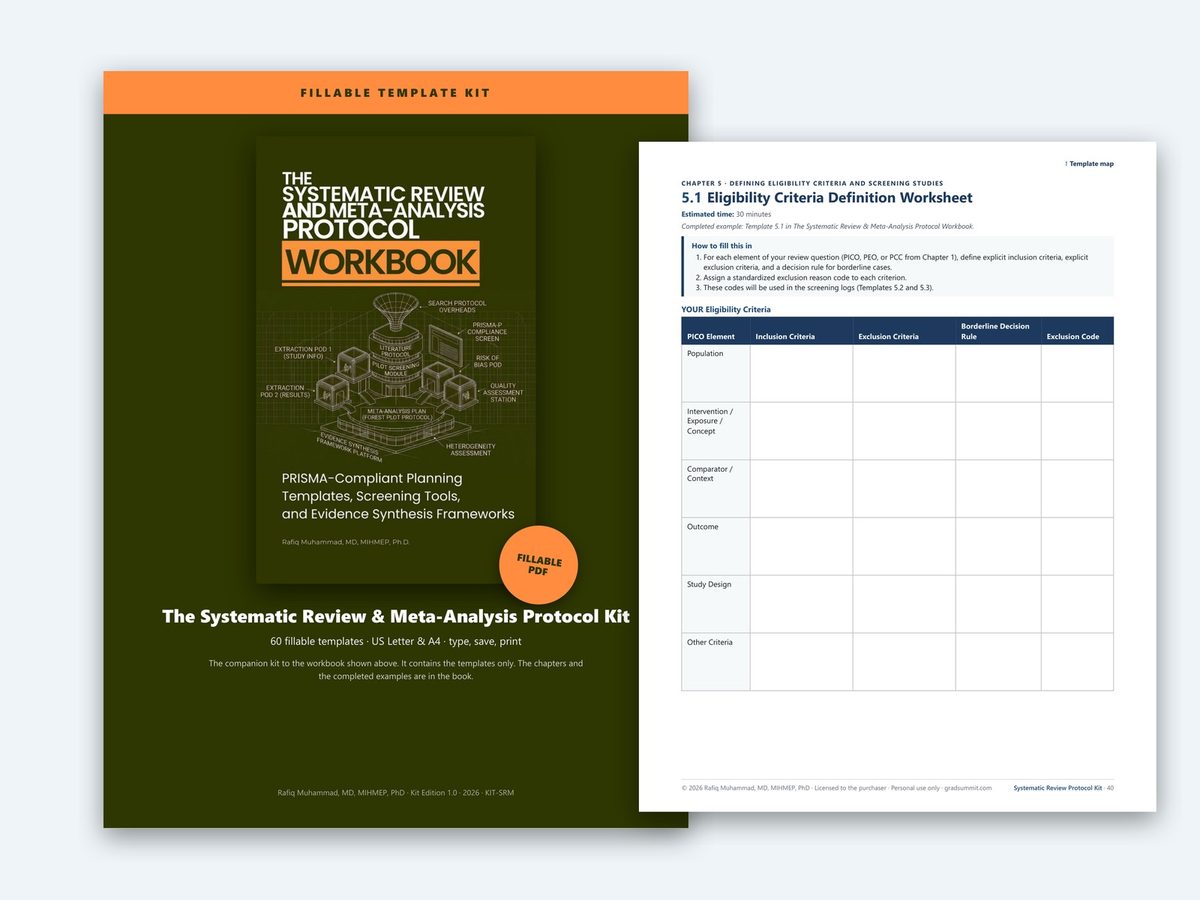
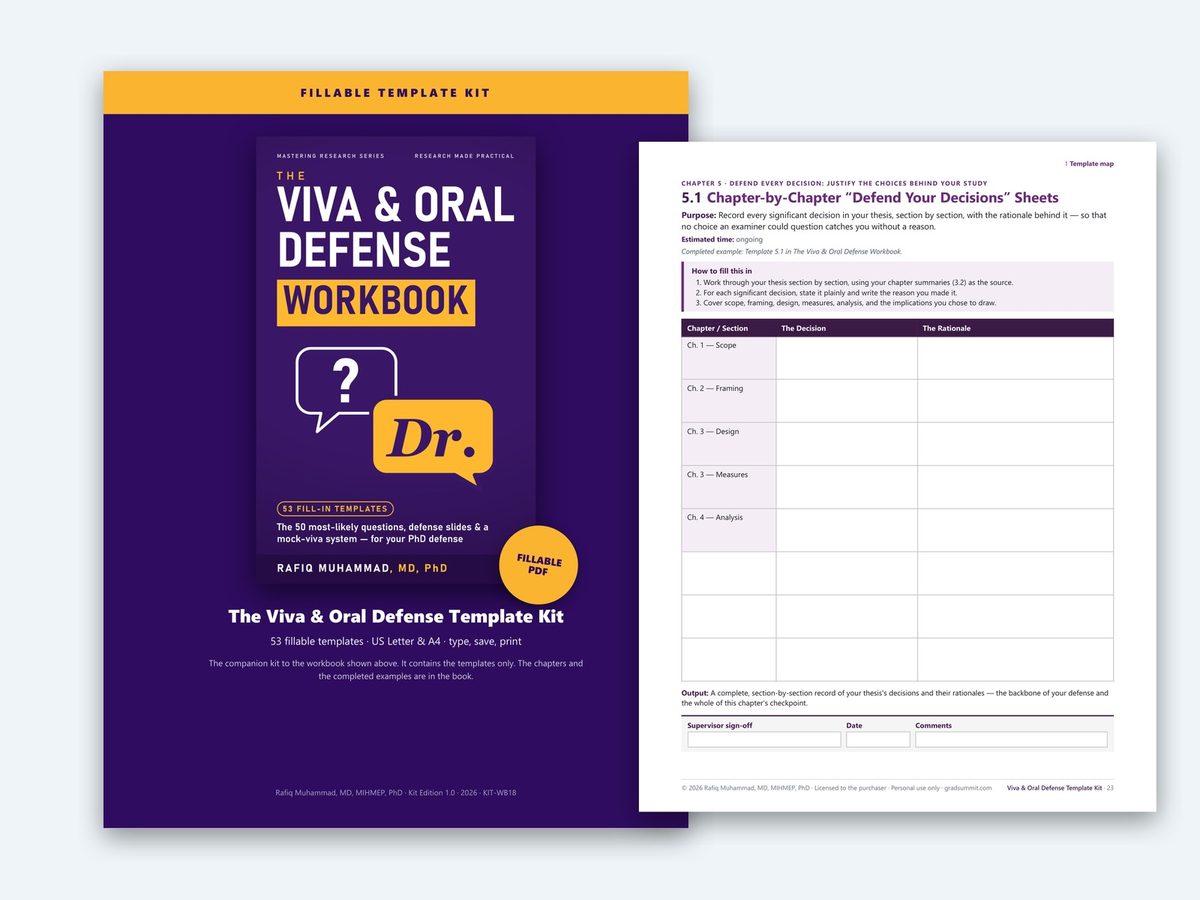
Each card links to the kit's own page and a free sample of its first pages.
For a complete kit as your students would receive it, ask for an evaluation copy. The first one available is
the Research Question & Problem Statement Kit.
Dissertation Timeline & Project Planner Kit
64 templates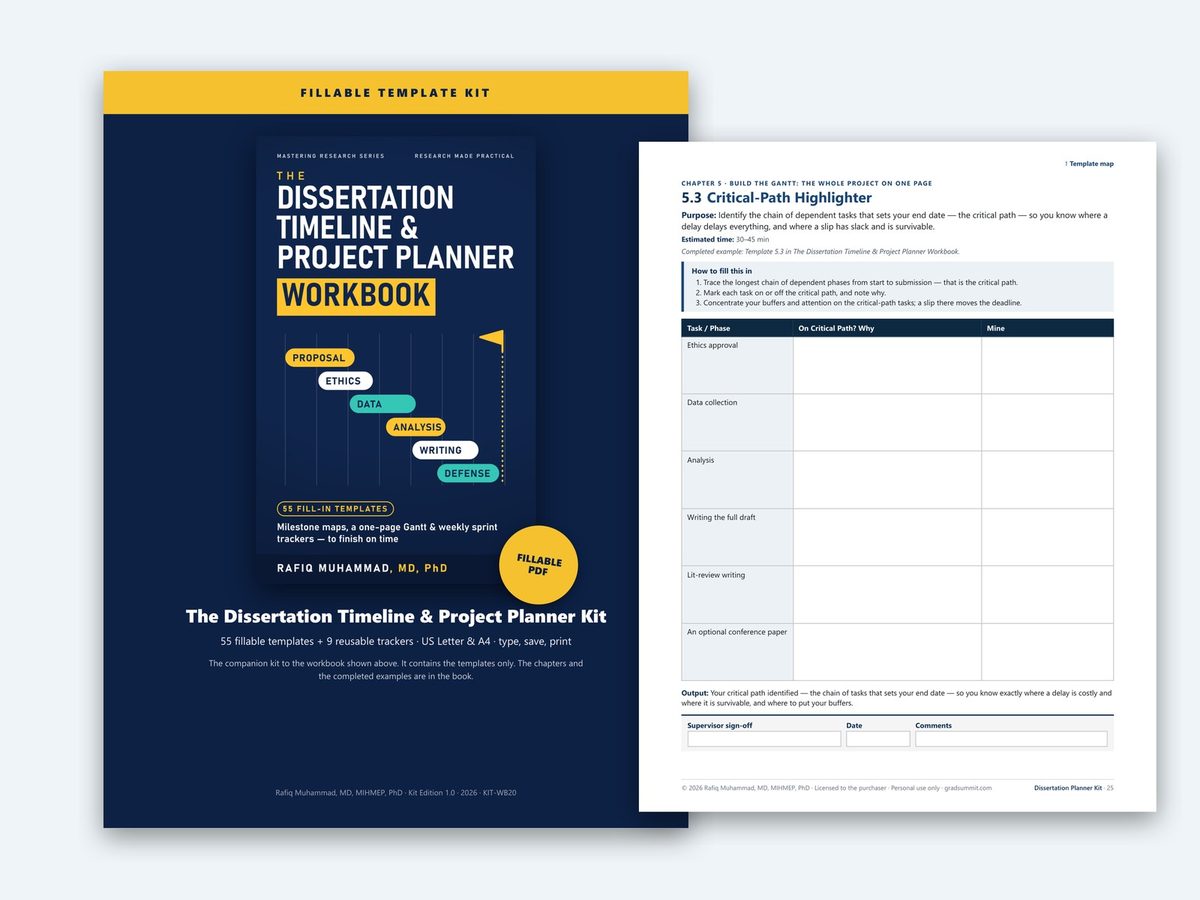
For the doctoral or master's student who knows the deadline but not the plan: build the timeline, run the weeks and finish on time.
Inside: Why Dissertations Overrun Self-Assessment; The Project Mindset Sheet; Your Constraints & Context Sheet; and 61 more.
Grant Writing & Budget Planning Kit
56 templates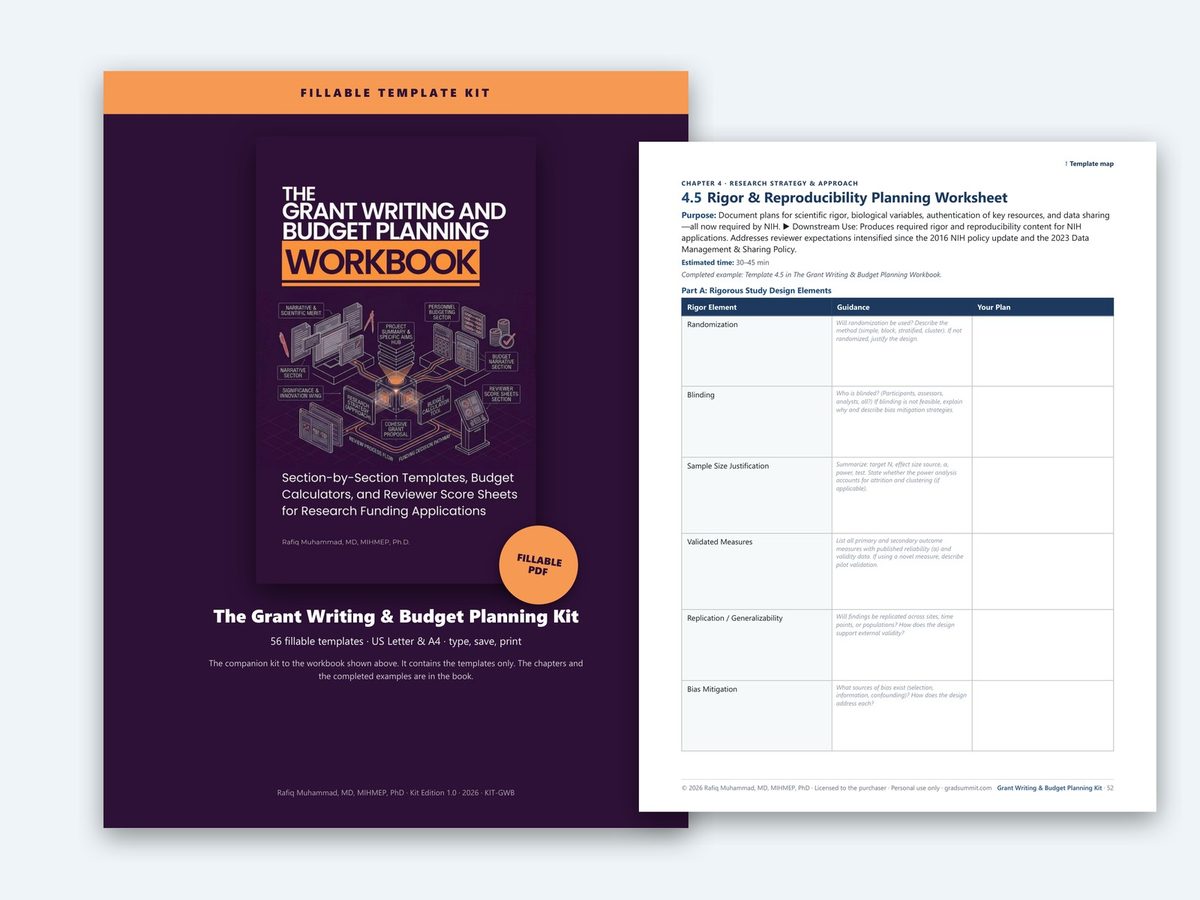
For the researcher writing a grant on a deadline: find the right funder, build the budget and justification, and write a proposal reviewers can fund.
Inside: Funder-Research Match Diagnostic Tool; Preliminary Data Inventory Worksheet; Grant Writing Master Timeline Planner; and 53 more.
Research Question & Problem Statement Kit
57 templatesEvaluation copy ready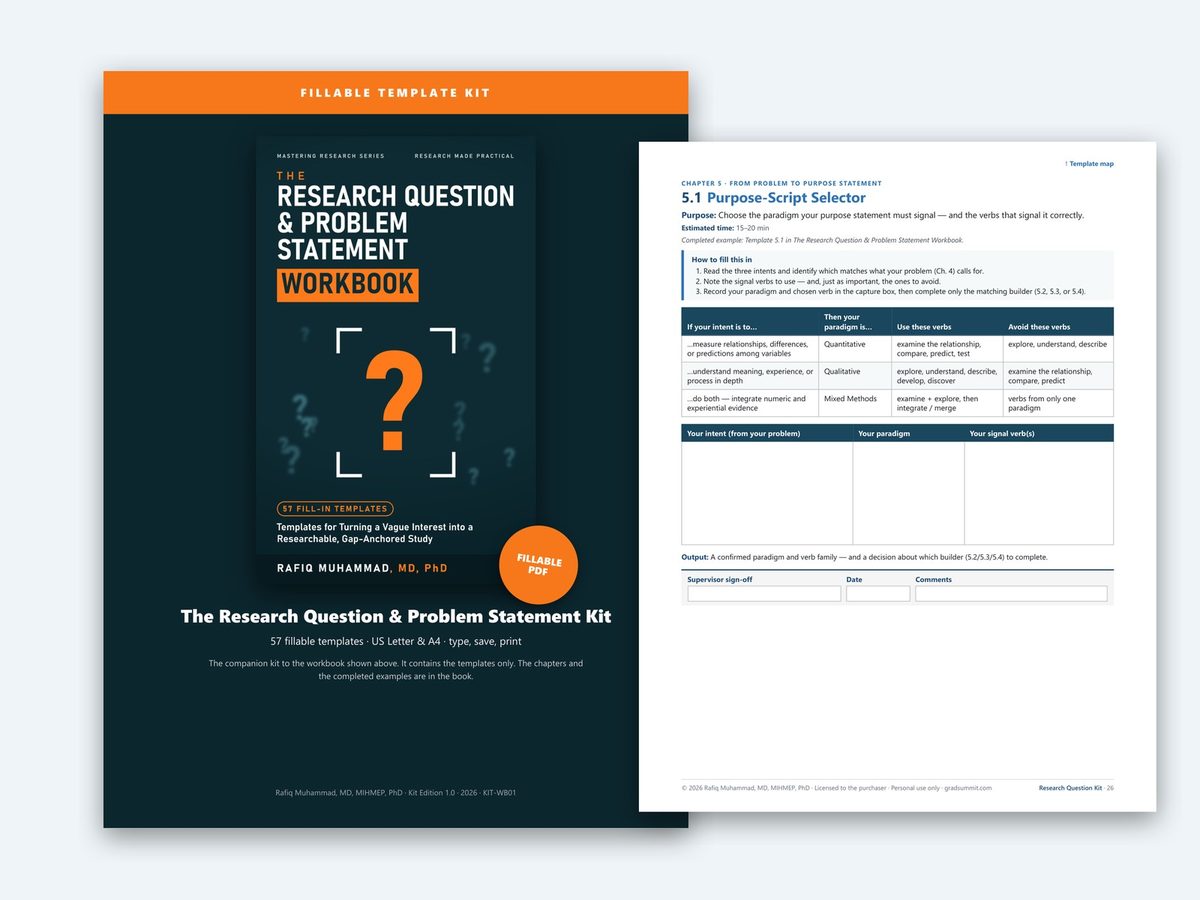
For the student whose topic is still a cloud: from a broad interest to a research question, problem statement and purpose that your committee will sign off.
Inside: Interest Inventory & Motivation Audit; The Topic-Narrowing Funnel; Topic Scope Thermometer; and 54 more.
Interview & Focus Group Kit
48 templates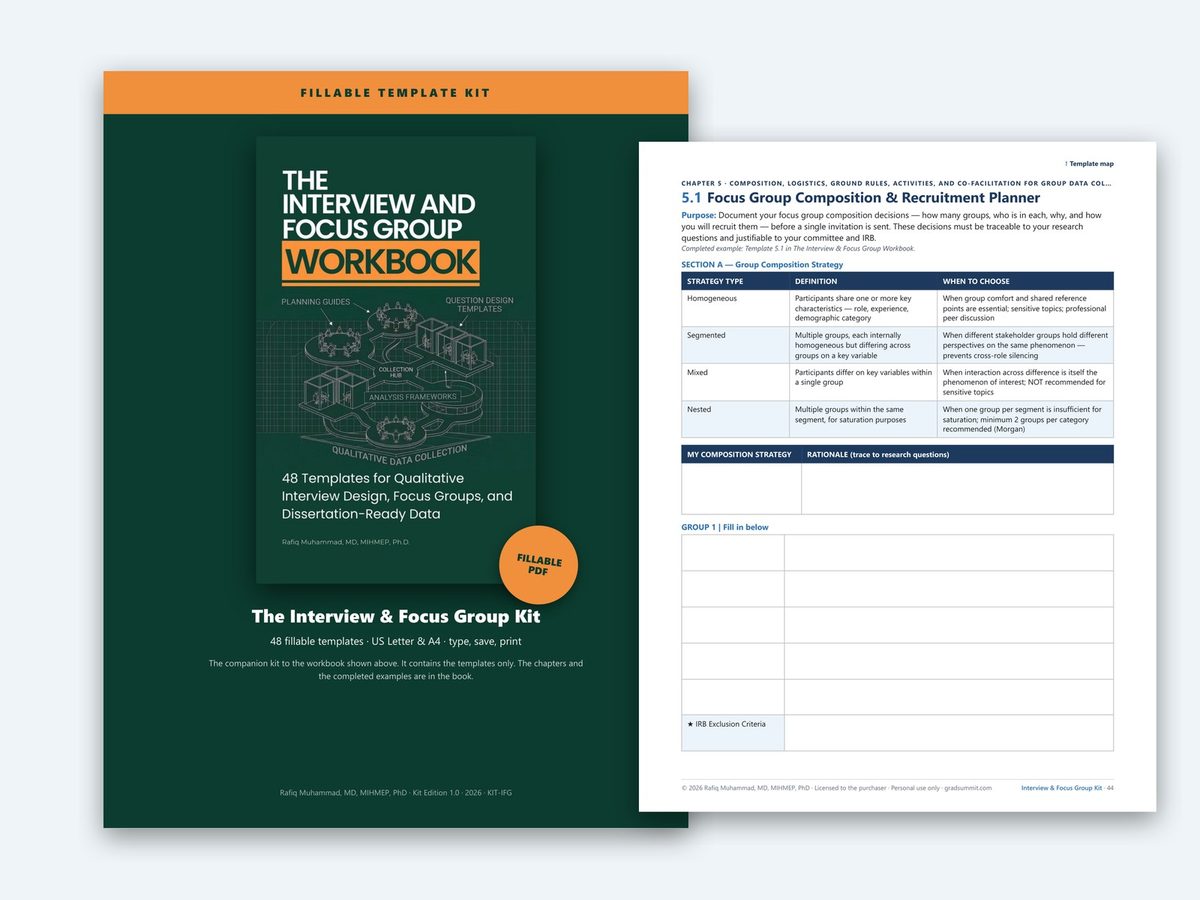
For the researcher running interviews or focus groups: design the guide, run the sessions, manage the recordings and analyse what people said.
Inside: Research Question–to–Data Source Alignment Matrix; Participant Sampling Strategy Planner; Data Collection Timeline & Logistics Planner; and 45 more.
Mixed Methods Research Kit
58 templates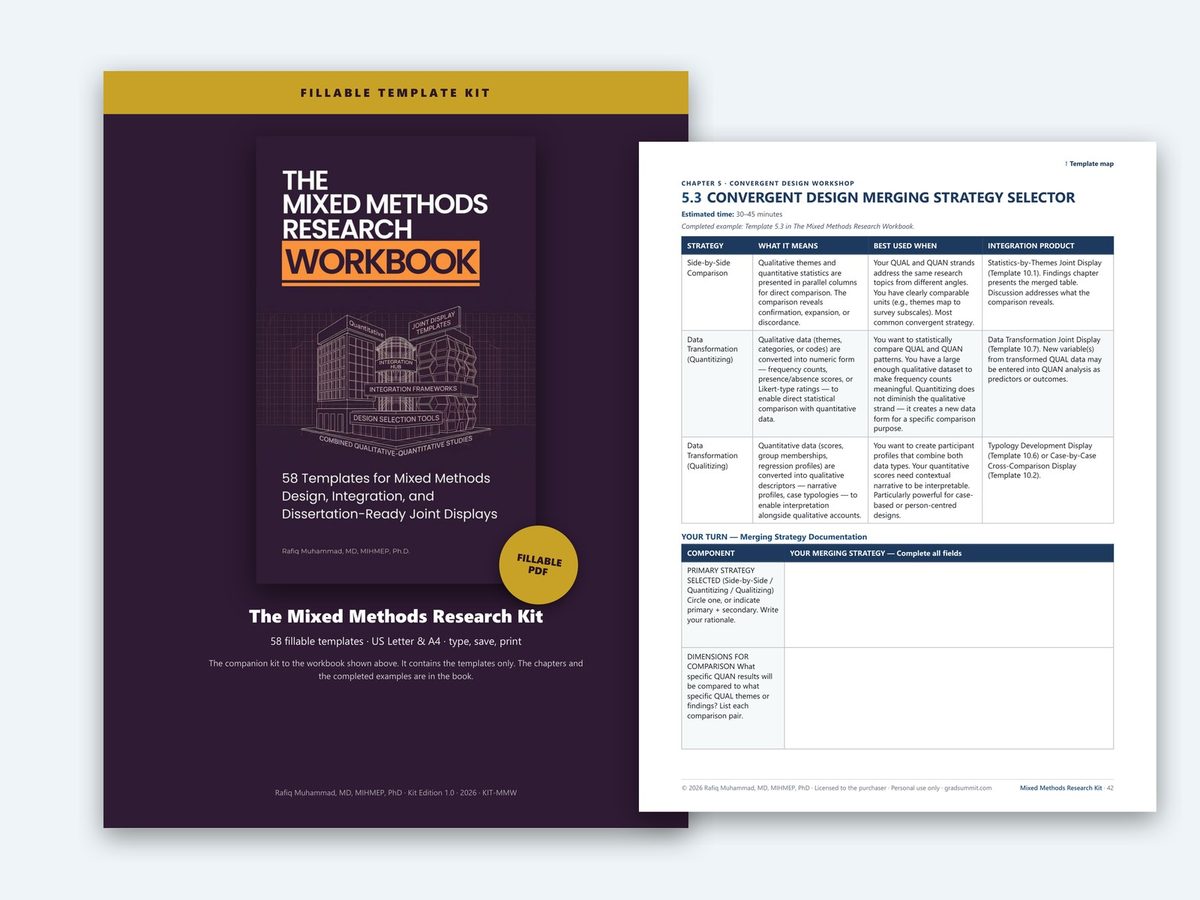
For the researcher combining numbers and stories: choose the mixed methods design, integrate the strands and defend the choice to your committee.
Inside: The Paradigm Positioning Worksheet; The "Why Mixed Methods?" Justification Builder; Mixed Methods Terminology Quick-Reference & Self-Test; and 55 more.
Research Data Collection & Management Kit
50 templates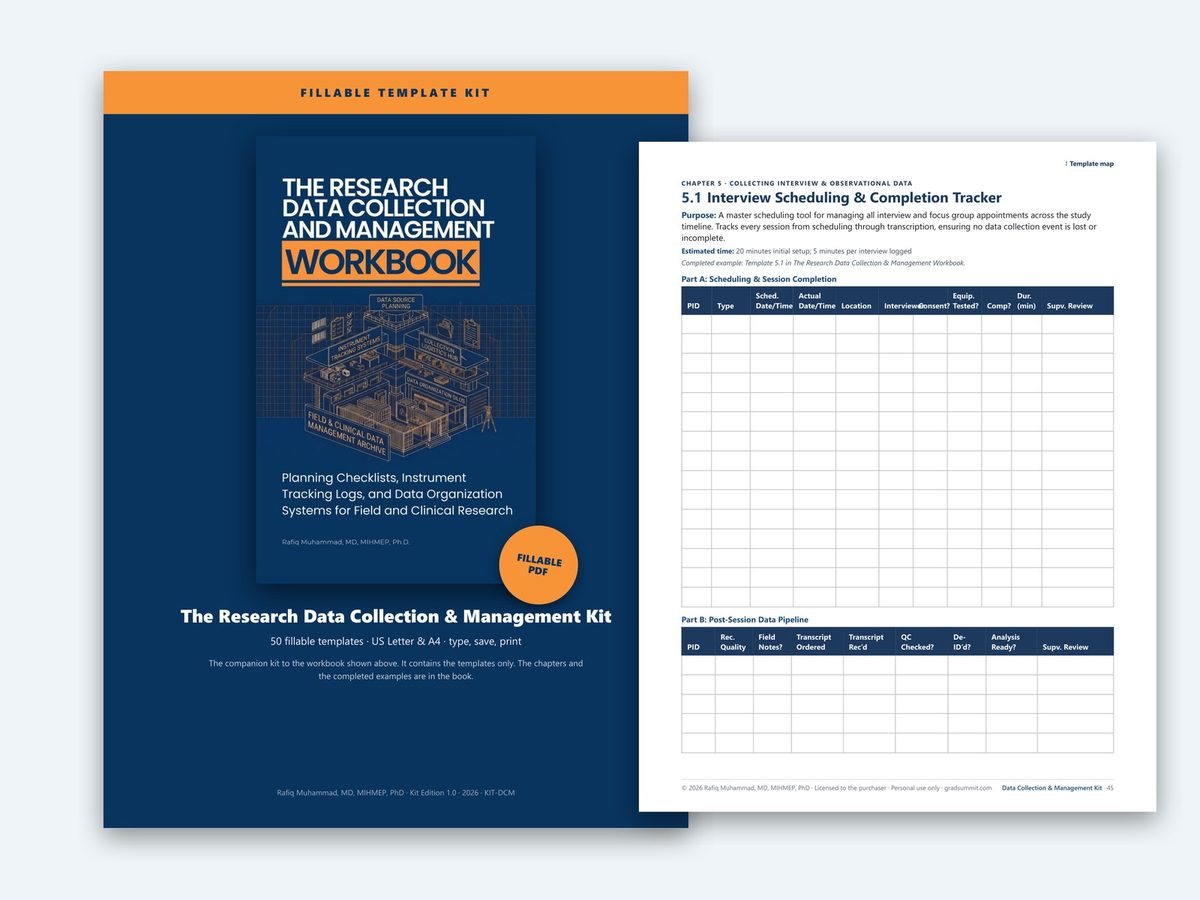
For the researcher about to collect data: a protocol, instruments, tracking logs, data-management plan and quality checks before the first participant arrives.
Inside: Data Collection Go/No-Go Checklist; Study Protocol Summary Sheet; Instrument Inventory & Readiness Log; and 47 more.
Sample Size & Power Analysis Template Kit
64 templates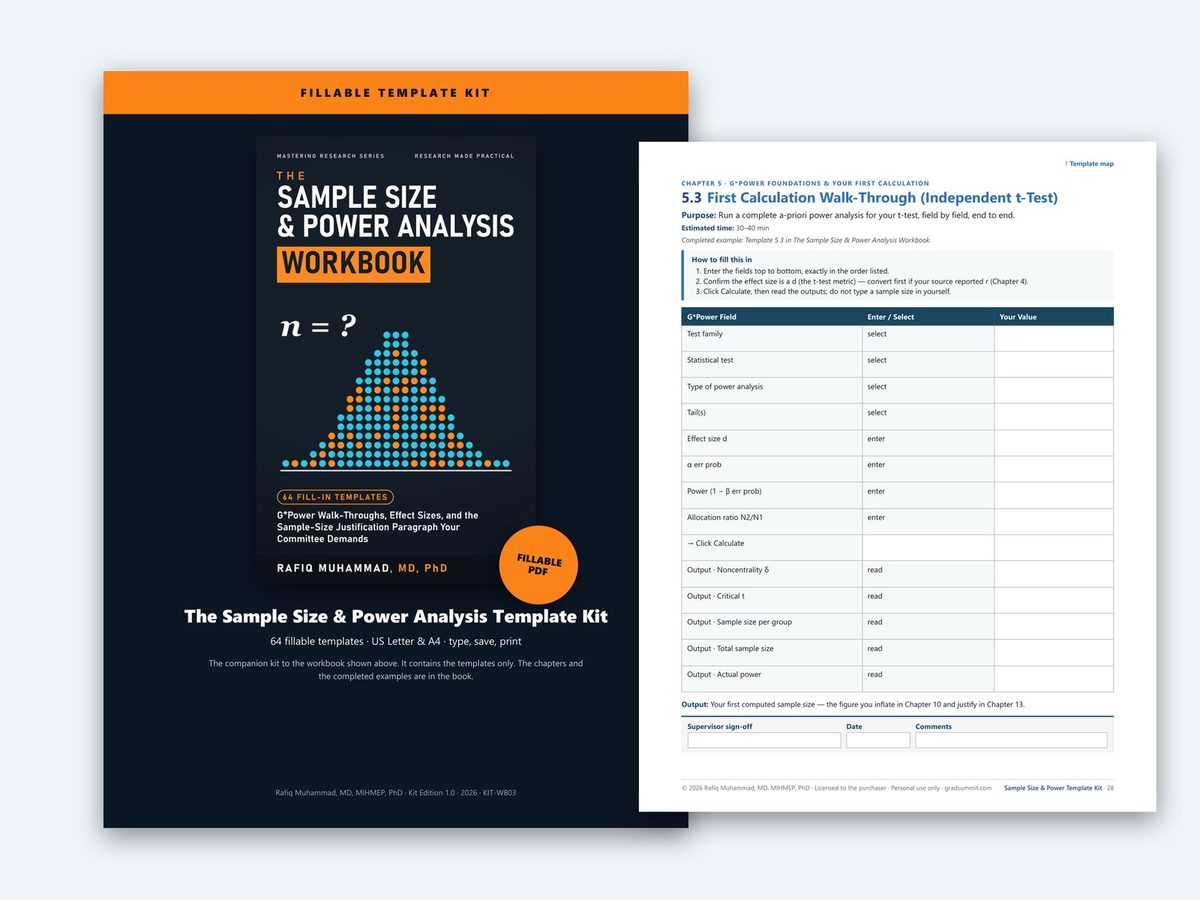
For the researcher asked "how many participants do you need?": a defensible power analysis and the justification paragraph your committee, ethics board or grant reviewer wants.
Inside: Four-Parameter Primer Worksheet; Why-It-Matters Stakes Sheet; What My Reviewers Require; and 61 more.
Grounded Theory Template Kit
58 templates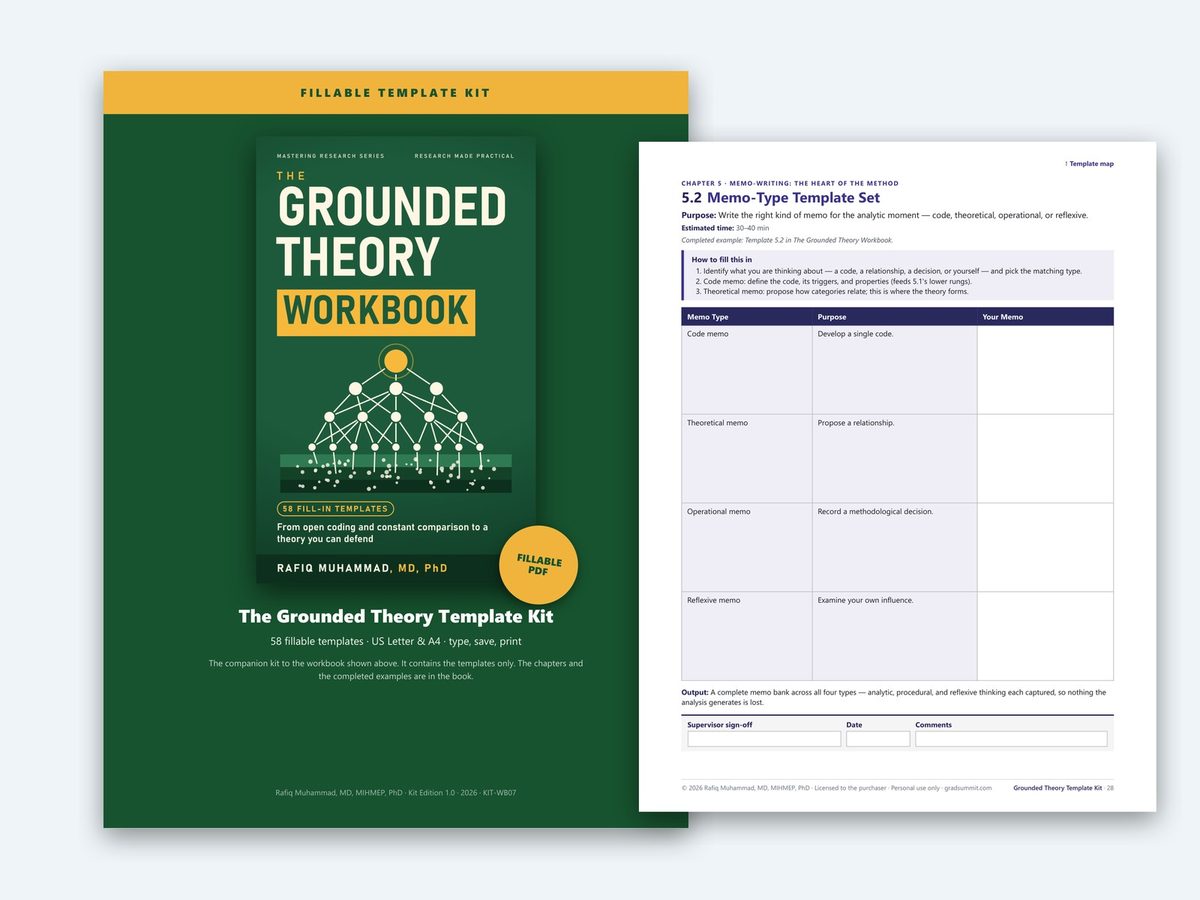
For the grounded theory researcher from first interview to final theory: sampling, coding, memos, categories and the audit trail behind your theory.
Inside: Is This Really Grounded Theory? Diagnostic; GT Tradition Selector (Glaser / Strauss & Corbin / Charmaz); GT Readiness & Fit Check; and 55 more.
Phenomenology & IPA Template Kit
58 templates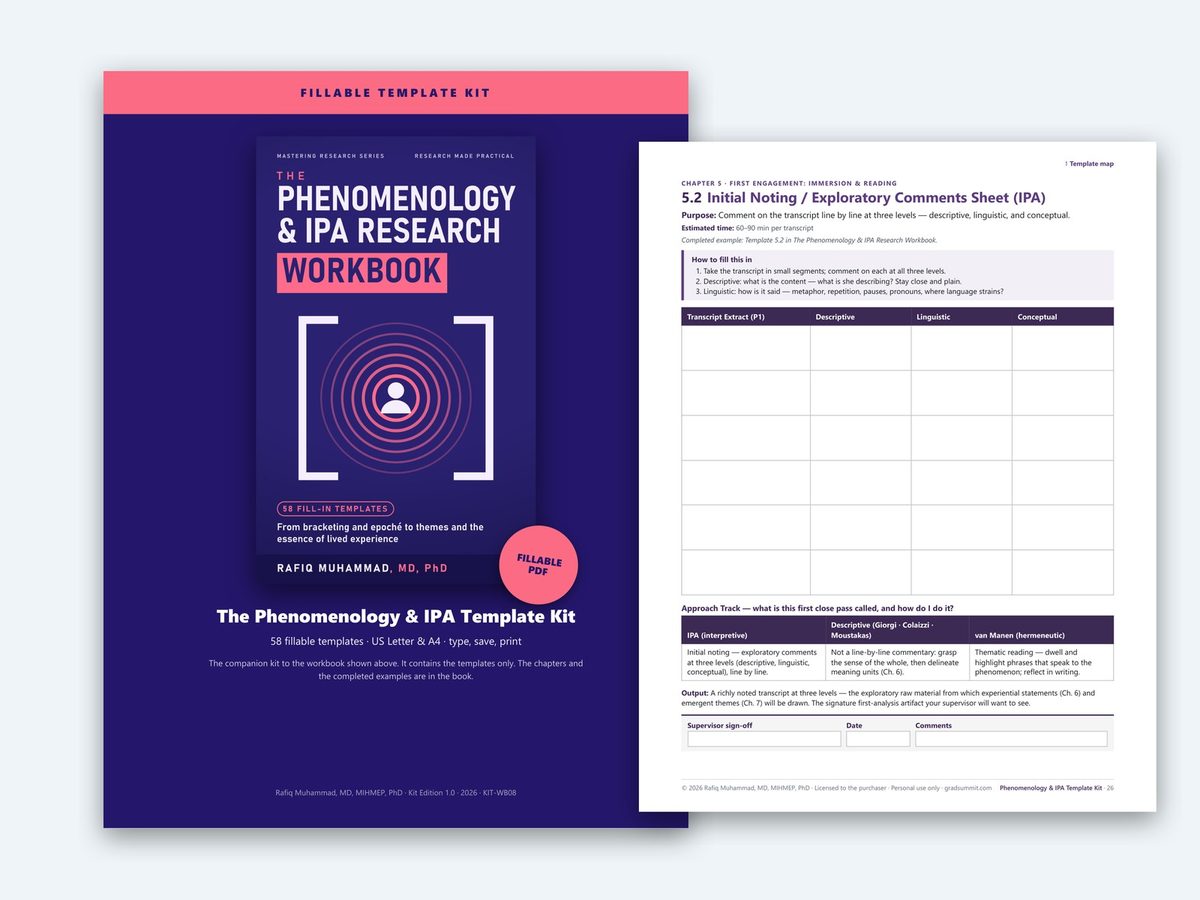
For the phenomenology or IPA researcher: bracketing, interviews, experiential statements, themes and a write-up that shows your interpretive work.
Inside: Is This a Phenomenological Study? Diagnostic; Descriptive vs. Interpretive Decision Sheet; Phenomenological Approach Selector; and 55 more.
Qualitative Coding Kit
45 templates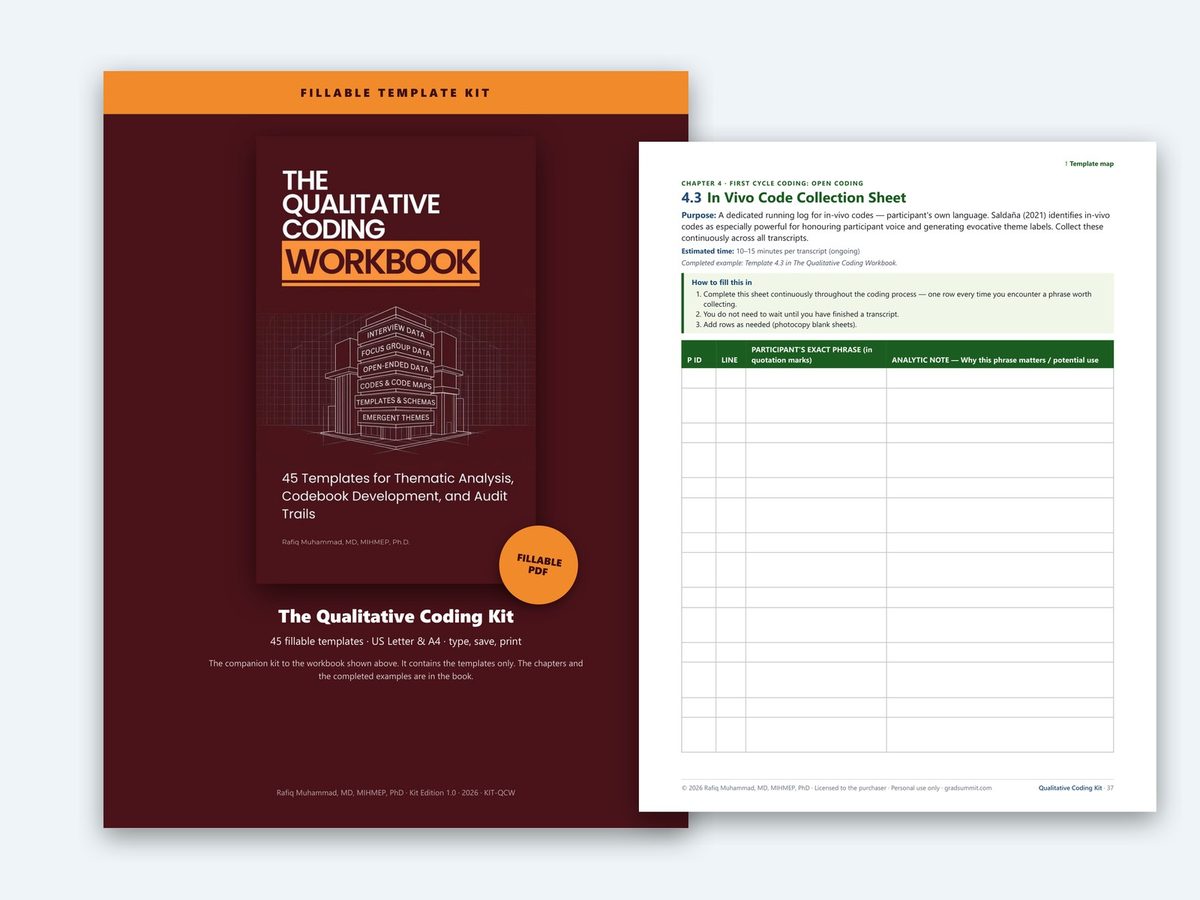
For the researcher with a stack of transcripts and a deadline: from first reading to codebook, themes and a committee-ready audit trail.
Inside: Qualitative Coding Readiness Checklist; Research Question–to–Coding Alignment Matrix; Qualitative Tradition Selector Worksheet; and 42 more.
Statistical Test Selection Kit
64 templates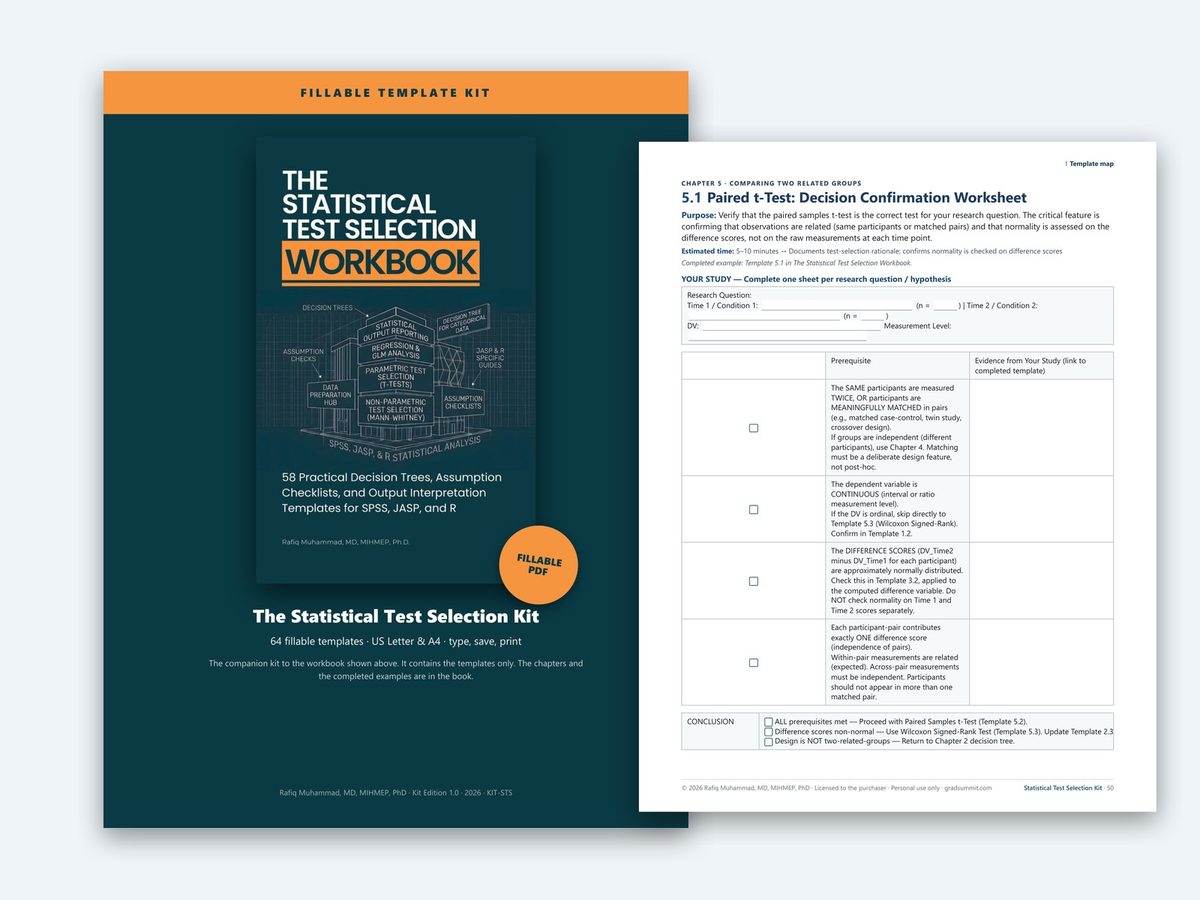
For the student staring at a dataset and a list of tests: pick the right test, check its assumptions, run it and report it in APA style.
Inside: Variable Inventory Worksheet; Variable Classification Matrix; Variable Role Assignment Worksheet; and 61 more.
Abstract, Title & Keyword Template Kit
45 templates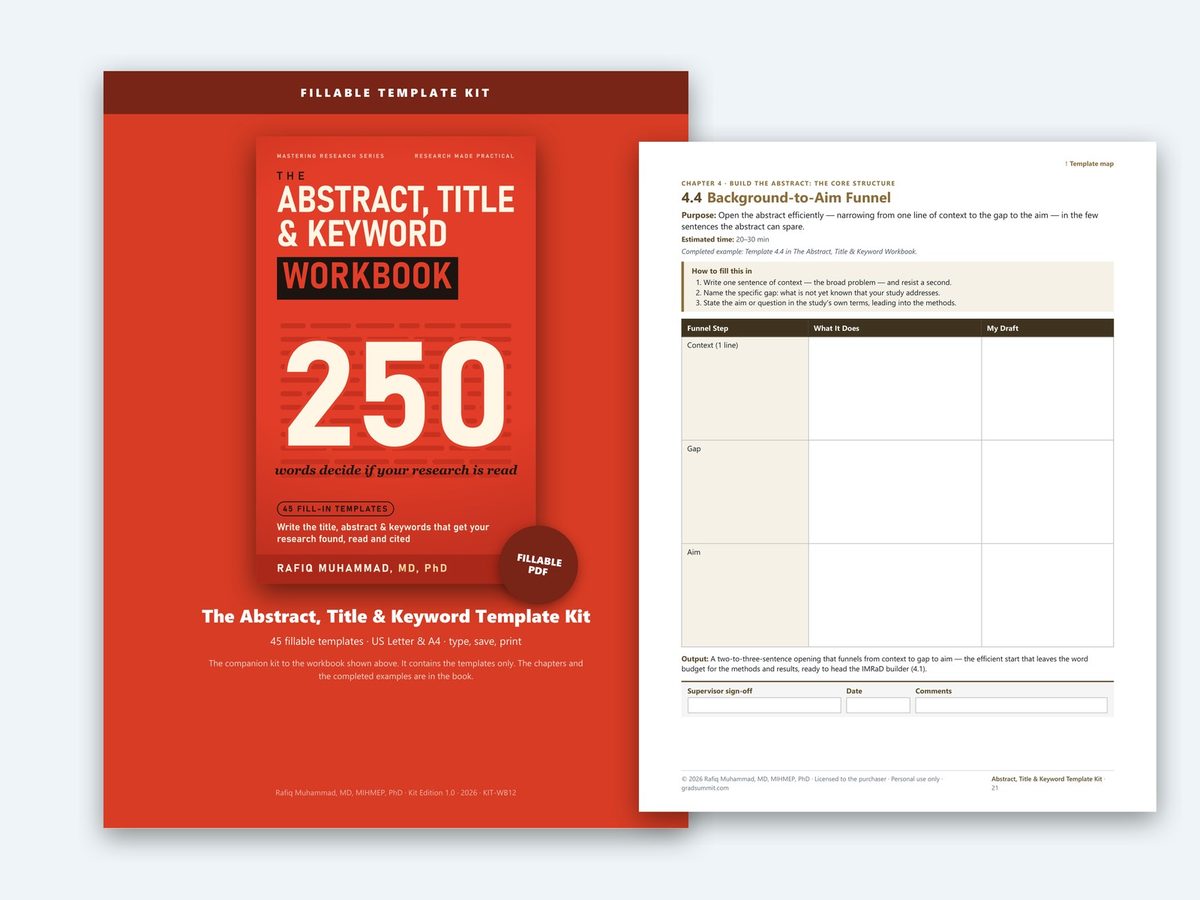
For the author facing a word limit and a busy reader: an abstract, title and keywords that get your paper found and read.
Inside: The Discoverability Funnel Map; “Written Last, Worst” Self-Diagnostic; Title/Abstract/Keyword Vocabulary Decoder; and 42 more.
Academic Integrity & Paraphrasing Template Kit
51 templates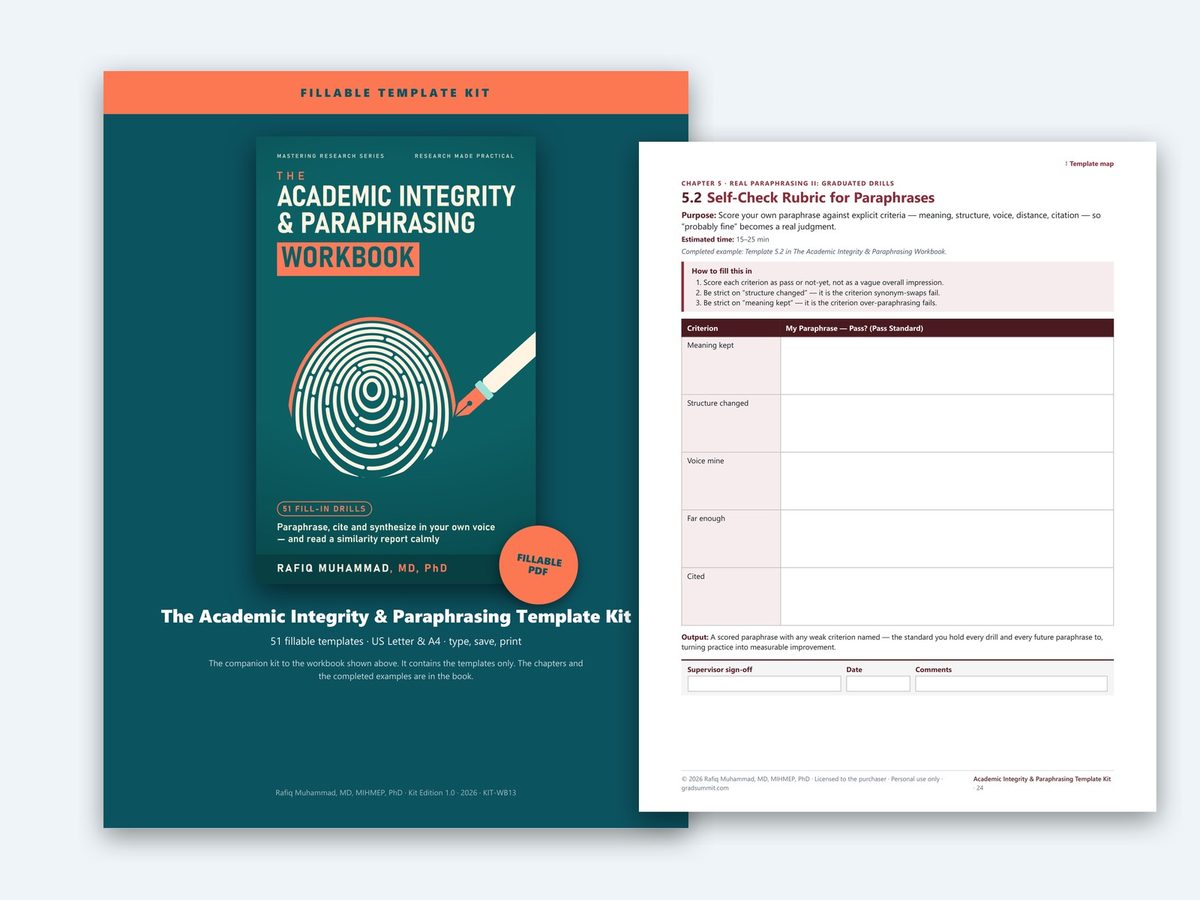
For the student who wants to write from sources without fear of a similarity report: paraphrase, cite and check your work with confidence.
Inside: Plagiarism Types Decoder; “Why It Happens to Good Students” Self-Reflection; Integrity Mindset Sheet; and 48 more.
Academic Writing & Scholarly Style Kit
53 templates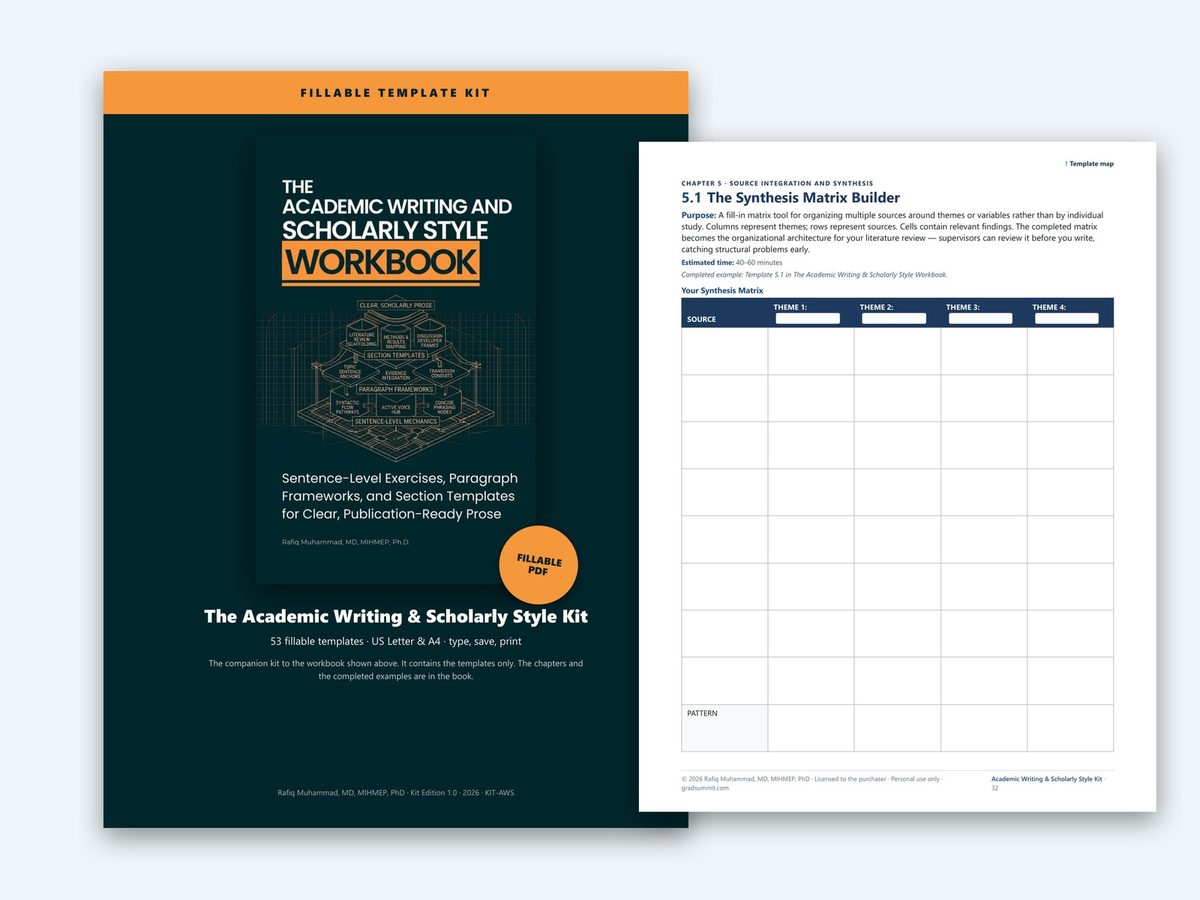
For the student whose drafts come back marked "unclear" or "not academic enough": sentence craft, structure, paraphrasing and referencing that read like a scholar.
Inside: The 10-Dimension Writing Self-Assessment; The Feedback Translator; Personal Practice Plan Builder; and 50 more.
Journal Selection & Submission Template Kit
50 templates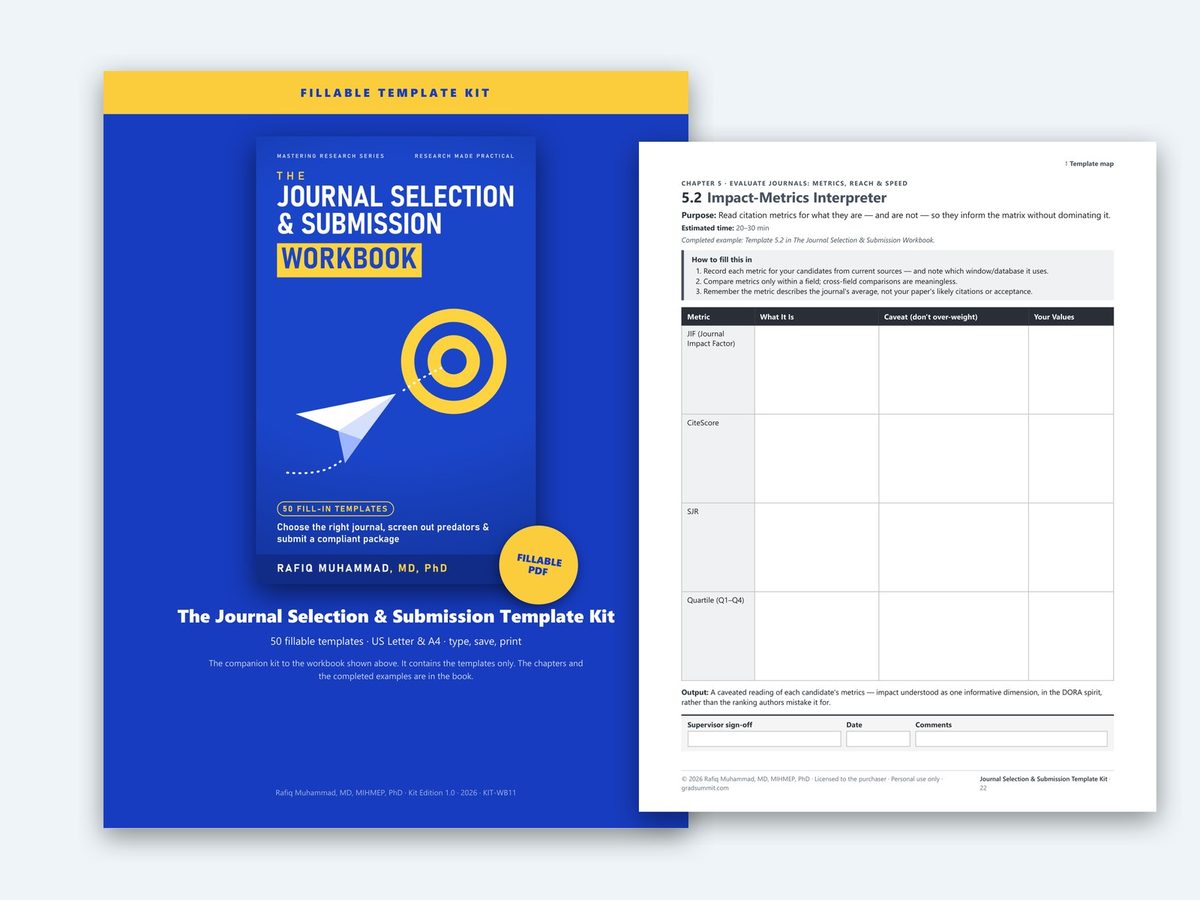
For the author with a finished paper: choose the right journal, avoid predatory ones, meet every requirement and manage the submission to a decision.
Inside: The Cost-of-Poor-Fit Reality Sheet; Submission Strategy Mindset; Journal-Selection Vocabulary Decoder; and 47 more.