Mom to 3 Boys
★★★★★
“I am not going to lie before this workbook showed up, I was extremely confused during my doctoral qualitative data analysis course. This workbook explained everything to me.”
Read on Amazon →Home › Shop › Analyzing the data › The Qualitative Coding Workbook
For doctoral and master's students coding qualitative data
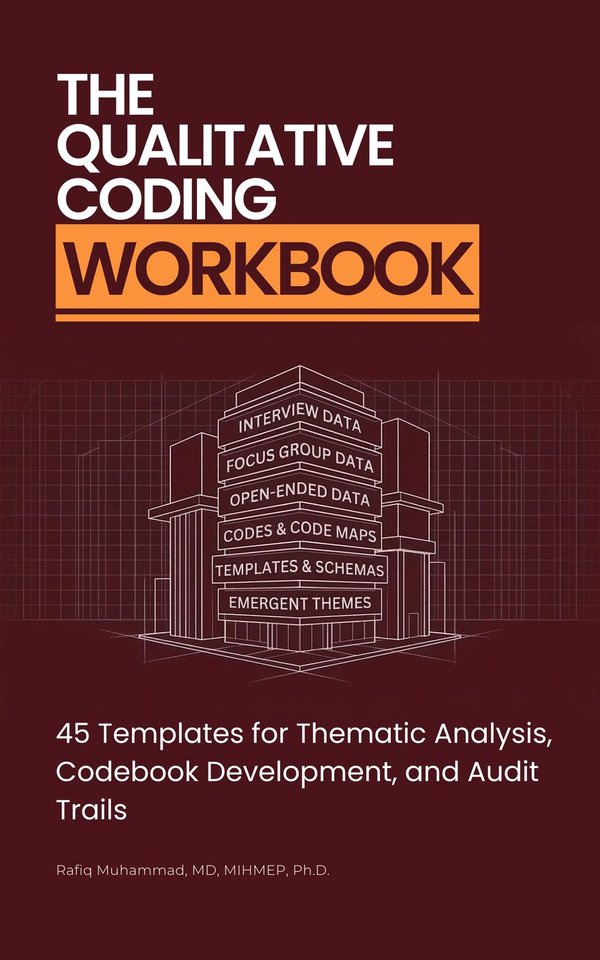
The Qualitative Coding Workbook
Your methods textbook explained what coding is. Nobody gave you the tools to do it. This workbook is a fill-in coding system that takes you from the first read-through to a complete audit trail, with a worked example beside every blank template.
By Dr. Rafiq Muhammad, MD, PhD · 258 pages · Thematic analysis, grounded theory, phenomenology and more · Paperback $35.99 · ★★★★★ 18 reader reviews
What readers say
★★★★★ 18 reader reviews from Amazon
“I am not going to lie before this workbook showed up, I was extremely confused during my doctoral qualitative data analysis course. This workbook explained everything to me.”
Read on Amazon →“Throughout my phd, I had to refer to multiple research books, but none of them so simplified and put together for qualitative analysis.”
Read on Amazon →“As a doctoral student working on my dissertation, this is a fabulous resource for anyone conducting qualitative research. The workbook is broken down into small, manageable sections, each with an associated checklist.”
Read on Amazon →“The audit trail sections, in particular, helped me think more carefully about documenting my process.”
Read on Amazon →“I am currently working on my dissertation for school and doing a qualitative study and this has helped tremendously with coding.”
Read on Amazon →“I am impressed with the coverage of reflexivity in this book. The attention given to the statement of positionality is fantastic.”
Read on Amazon →“It offers 45 structured templates that make the challenging task of thematic analysis more manageable by providing a step-by-step system that ensures academic rigor.”
Read on Amazon →“Unlike many research books that focus on theory, this one shows you exactly how to do the work.”
Read on Amazon →“This book is an excellent asset for anyone beginning a qualitative research project.”
Read on Amazon →“This book forces you to engage with qualitative analysis, rather than just explaining it.”
Read on Amazon →“However, it does seem to be written and used as it was intended to be which is why I gave it a five star.”
Read on Amazon →“Very easily layout and very helpful. Tons of templates to go over and tons of information.”
Read on Amazon →“It has 45 templates for you to work with and even tells you how to use this book to the best advantage.”
Read on Amazon →“It’s extremely detailed in what you will be learning and easy to use.”
Read on Amazon →“So much info. A lot to learn here and you may need to read it twice . Great”
Read on Amazon →“This book is based off of qualitative research and it is an amazing coding book.”
Read on Amazon →“This workbook breaks down coding into ten different sections to get the results you need to succeed.”
Read on Amazon →“I’ve really come to appreciate this series as I continue mentoring doctoral students, and this one on qualitative coding is a great addition to my collection.”
Read on Amazon →Sound familiar?
“I'm staring at hundreds of pages of transcripts and I don't know where to start.”
“My codes keep multiplying and I can't see the themes.”
“My committee asked for an audit trail and I don't have one.”
“I'm not sure my analysis would hold up to a reviewer.”
Coding is a process you can document, not a talent you either have or don't. When every step produces a page your supervisor can review, your methodology chapter is largely written by the time you finish coding.
How it works
The full analytic path, with every decision written down as you go.
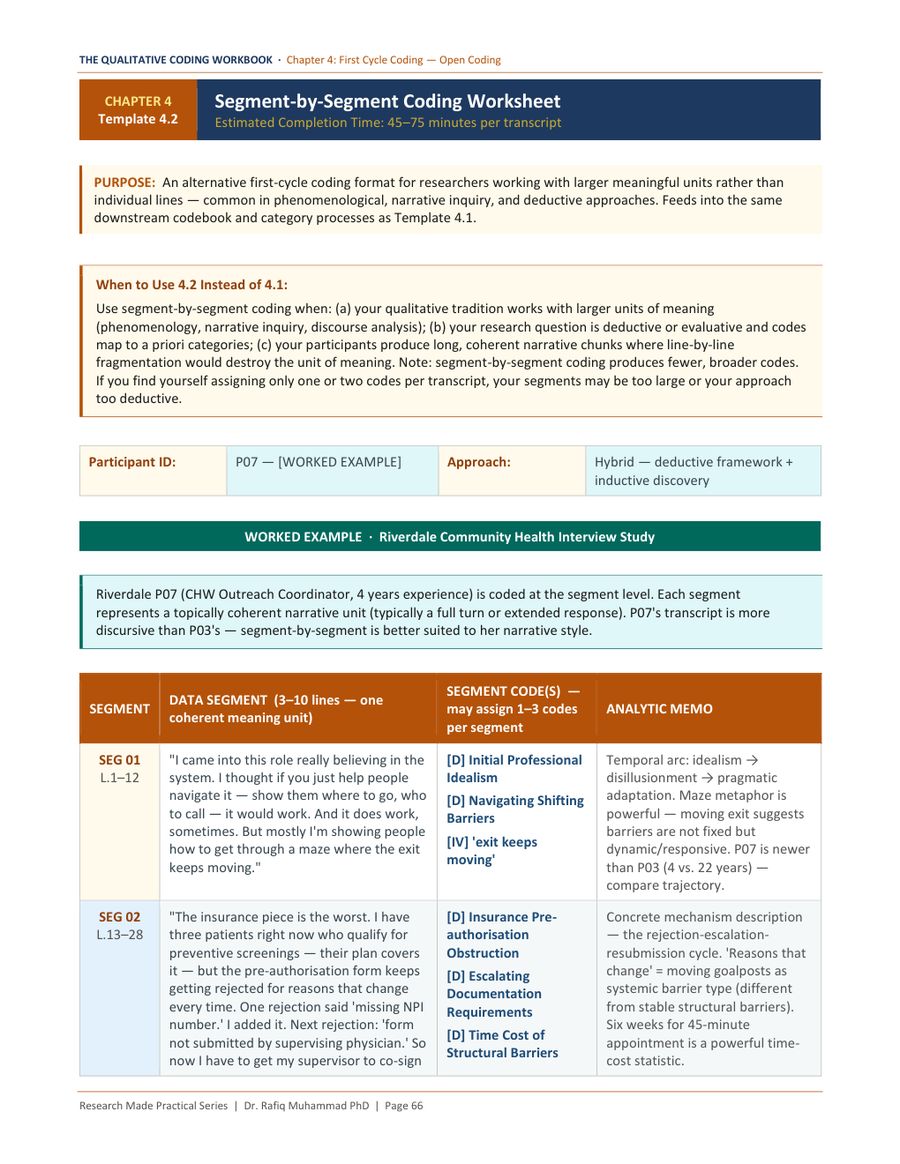
Immerse, memo, then code line by line or segment by segment, and build a master codebook.
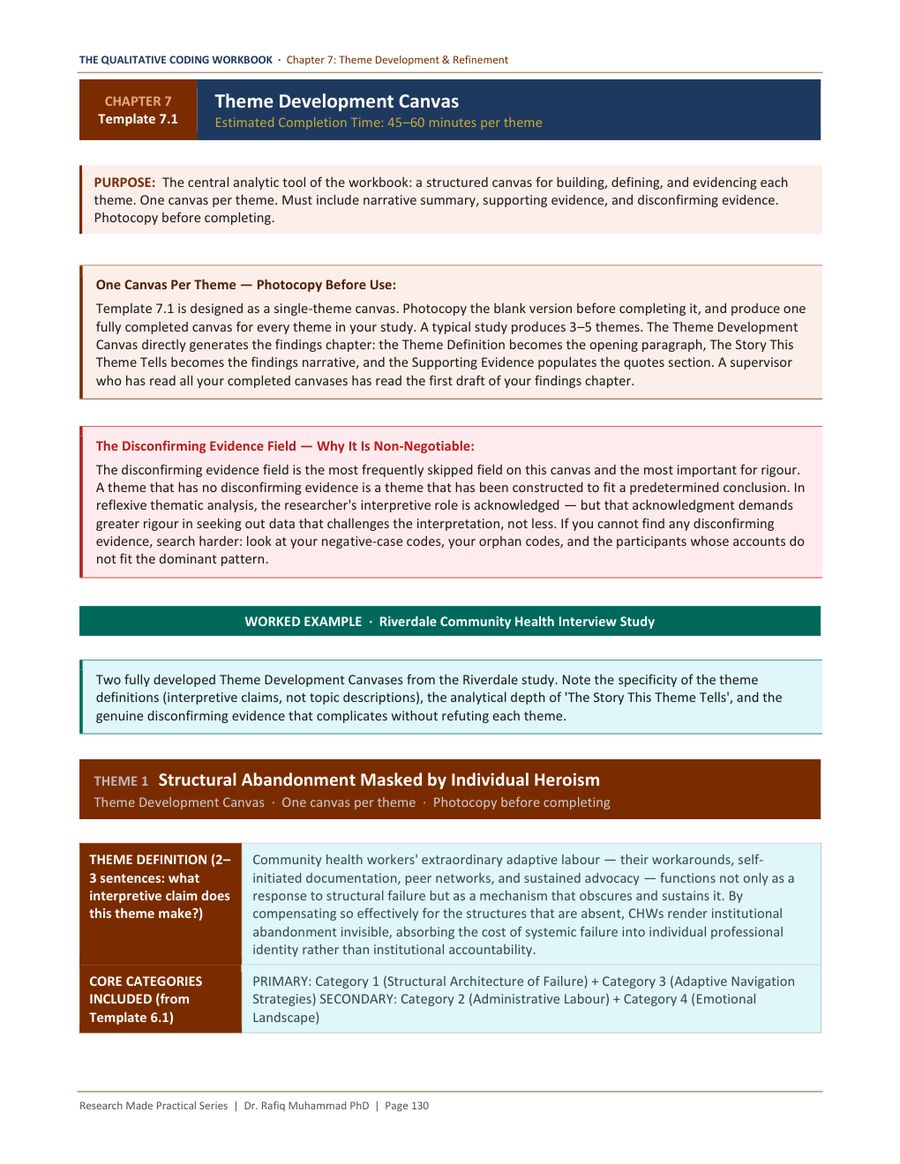
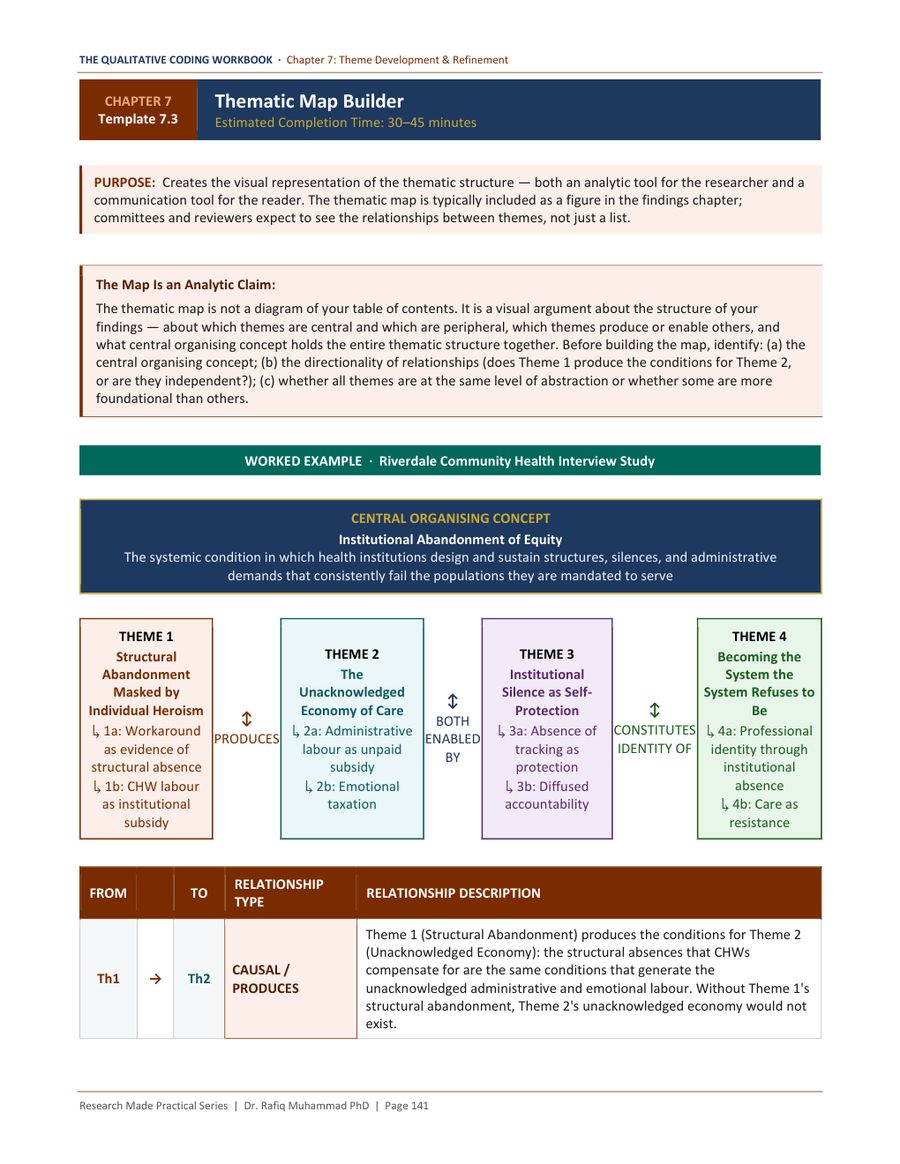
Cluster codes into categories, develop and name themes, map them, and test their quality.
Reflexivity, inter-coder reliability where it fits, and an audit trail mapped to Lincoln & Guba.
What you will have
Look inside
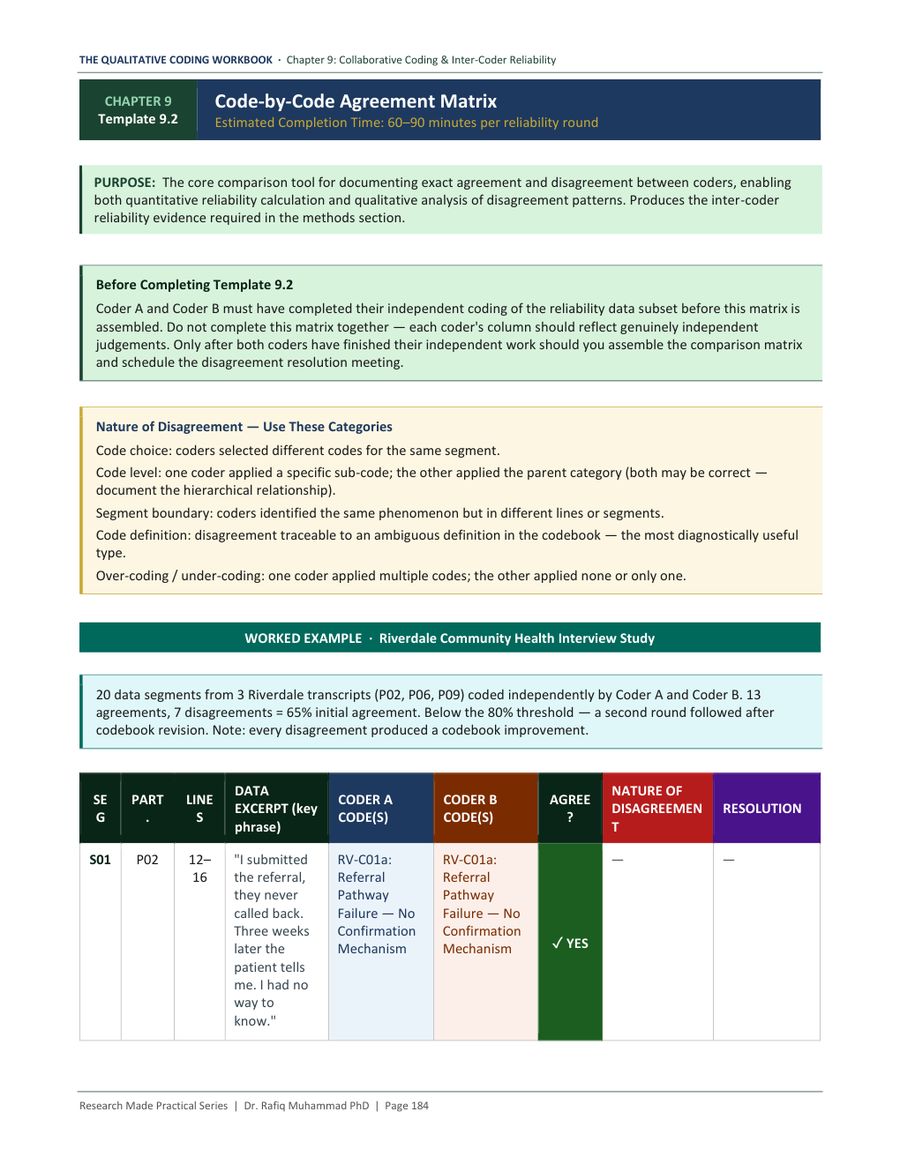
One interview study is worked through every chapter, from first codes to final themes. These are real pages. Tap to enlarge.
Is it for you?

Clinician-researcher, PhD from Karolinska Institutet, and author of the Mastering Research books and workbooks, used by graduate students from the research question to the viva.
Choose your format
Not ready to buy? Get the free toolkit for analyzing the data by email and start today. Get it free
Questions
Yes. Braun and Clarke's reflexive thematic analysis is the default framework for the core chapters. Chapter 8 then adapts the process for other traditions.
Not always. The book explains when it is appropriate and when, as in reflexive thematic analysis, it is not, and gives you the tools if you need them.
Yes. The templates work on paper or alongside any coding software, and there is a planning sheet for moving your work into software.
That is a large part of the point: the reflexivity, trustworthiness and audit-trail templates produce the evidence your methods chapter needs.
Code them with a process you can show, and themes you can defend.
Choose your formatMore for this stage: everything for analyzing the data · the free toolkits